
Struggling to wind down at night? These four oils — each backed by research — help your nervous system shift into rest mode faster than you might expect.
Sleep is the foundation of everything. Without it, focus dissolves, emotions become harder to regulate, the immune system weakens, and the body struggles to repair itself. And yet, for a growing number of people, falling asleep — or staying asleep — has become genuinely difficult.
The pharmaceutical approach comes with side effects and dependency risks. The aromatherapy approach, by contrast, works with your nervous system rather than overriding it. It doesn’t sedate you — it creates the conditions in which your body can naturally shift into rest.
Here are the four essential oils with the most consistent evidence for improving sleep quality.

1. Lavender — The Most Studied Sleep Oil in the World
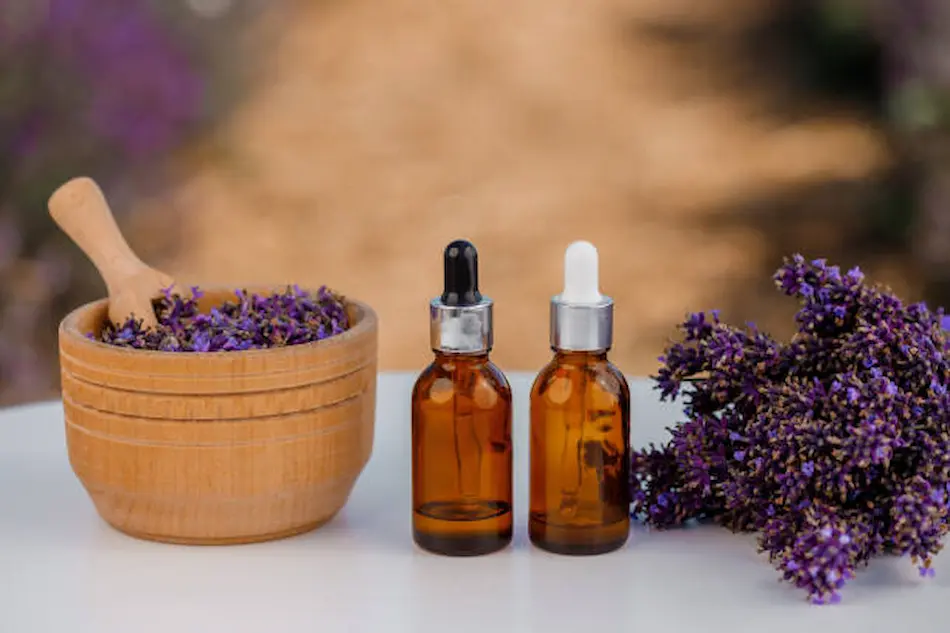
If there’s one essential oil that has genuinely earned its reputation, it’s lavender. The research is extensive and consistent. A 2015 study published in the Journal of Alternative and Complementary Medicine found that college students who used lavender aromatherapy before sleep showed significantly improved sleep quality, increased daytime energy, and better mental alertness the following morning — all without any medication.
The active compounds in lavender — primarily linalool and linalyl acetate — interact with GABA receptors in the nervous system, producing a calming effect that reduces anxiety, slows the heart rate, and lowers blood pressure. All three of these physiological changes are part of the natural transition into sleep.
For best results, add 5-8 drops of lavender essential oil to your diffuser about 30 minutes before you intend to sleep. Let it run through the night on intermittent mode, or set it to run for 2 hours and auto shut-off.
2. Cedarwood — The Sleep Oil You’ve Probably Never Tried
Cedarwood essential oil is one of the most underrated sleep aids in aromatherapy. It contains a compound called cedrol, which has demonstrated sedative properties in multiple animal and human studies. A 2003 study found that cedrol inhalation significantly reduced heart rate in healthy adults, mimicking the physiological state associated with deep relaxation.
Cedarwood has a warm, dry, woody scent — like the inside of a cedar chest or a forest after rain. It’s particularly effective for people who carry stress in their bodies rather than their minds: those who feel physically tense, restless, or unable to settle even when they’re mentally tired.
Try blending 4 drops of cedarwood with 4 drops of lavender for a combination that addresses both the mental and physical aspects of restlessness.

3. Vetiver — For Racing Minds
Vetiver is distilled from the roots of a grass native to South Asia, and its scent reflects that origin: it’s deep, earthy, smoky, and grounding in a way that few other oils can match. It’s not for everyone — some find it too intense on its own — but for people who lie awake with busy, racing minds, it’s often transformative.
Vetiver works partly through its sedative compounds and partly through something harder to quantify: its heaviness. The scent seems to pull attention downward, anchoring it in the body and away from the spiraling thoughts that keep so many people awake. Aromatherapists often describe it as the most “yin” of all essential oils — deeply still and quiet.
Use it sparingly — 2-3 drops is enough — and blend it with lavender or sandalwood to soften its intensity while preserving its grounding effect.
4. Sandalwood — Warmth for Winding Down
Sandalwood has been used in spiritual and wellness practices across India, Japan, and the Middle East for centuries, and its reputation as a calming, centering oil is well earned. Its primary active compound, alpha-santalol, has been shown in studies to reduce wakefulness and increase non-REM sleep duration.
Beyond the chemistry, sandalwood’s warm, creamy, slightly sweet scent has an almost immediate psychological effect — it signals safety, warmth, and comfort. Many people describe it as the olfactory equivalent of a weighted blanket. It’s particularly effective for anxiety-driven insomnia and for those who feel emotionally unsettled at night.
How to Use Essential Oils for Sleep: A Simple Routine
The most effective approach is consistency. Your brain is a pattern-recognition machine — it learns to associate specific scents with sleep through repetition. The more regularly you use your sleep oils, the more quickly your nervous system will respond to them.
Try this routine for two weeks:
- 30 minutes before bed, add 5-6 drops of your chosen oil (or blend) to your diffuser
- Dim the lights in your bedroom at the same time
- Put your phone face down
- Let the scent do its work
You’re not just using aromatherapy — you’re building a ritual. And rituals, by their nature, train the brain to transition between states. Within two weeks, the scent alone will begin to trigger the relaxation response before you’ve even gotten into bed.
Sleep is not something you chase. It’s something you create the conditions for. These four oils can help you do exactly that.